Every September, the warnings start again. Drive carefully, it's ember month. Watch your pocket, it's ember month. Something about September through December makes Nigerians brace for the worst, four months named for how they end rather than what happens in them, grouped together because "-ber" is the only thing September, October, November and December have in common on paper.
What ember month actually is, every year without fail, is the busiest stretch most small businesses will see. Salaries land with thirteenth-month bonuses attached. Owambe season peaks, weddings and anniversaries stacked back to back through December. Christmas shopping starts the moment ember month does, not the week before. Diaspora relatives come home and spend. Whatever a business sells, more people are trying to buy it in these four months than in the eight before them.
The Rush Is Real. The Tracking Usually Isn't.
A caterer who takes thirty bookings a month in June can suddenly be juggling eighty in November, same WhatsApp number, same notebook, same one person holding every "I've paid half" and "can you move my date" in their head. A tailor who normally turns work around in a week is now quoting three, and every client messaging to ask "where's my outfit" is a message that has to be found, answered and remembered on top of the actual sewing.
It's the same story we see every December with our own Android TV box line. Christmas is when people buy boxes as gifts, not July, and the DM volume on the business WhatsApp line triples almost overnight. Nothing about the product changes. What changes is whether the person answering those messages can tell, at a glance, who's paid, who's waiting on stock, and who ordered twice by accident, without scrolling back through three weeks of chat history to find out.
Why This Is the Month Systems Actually Fail
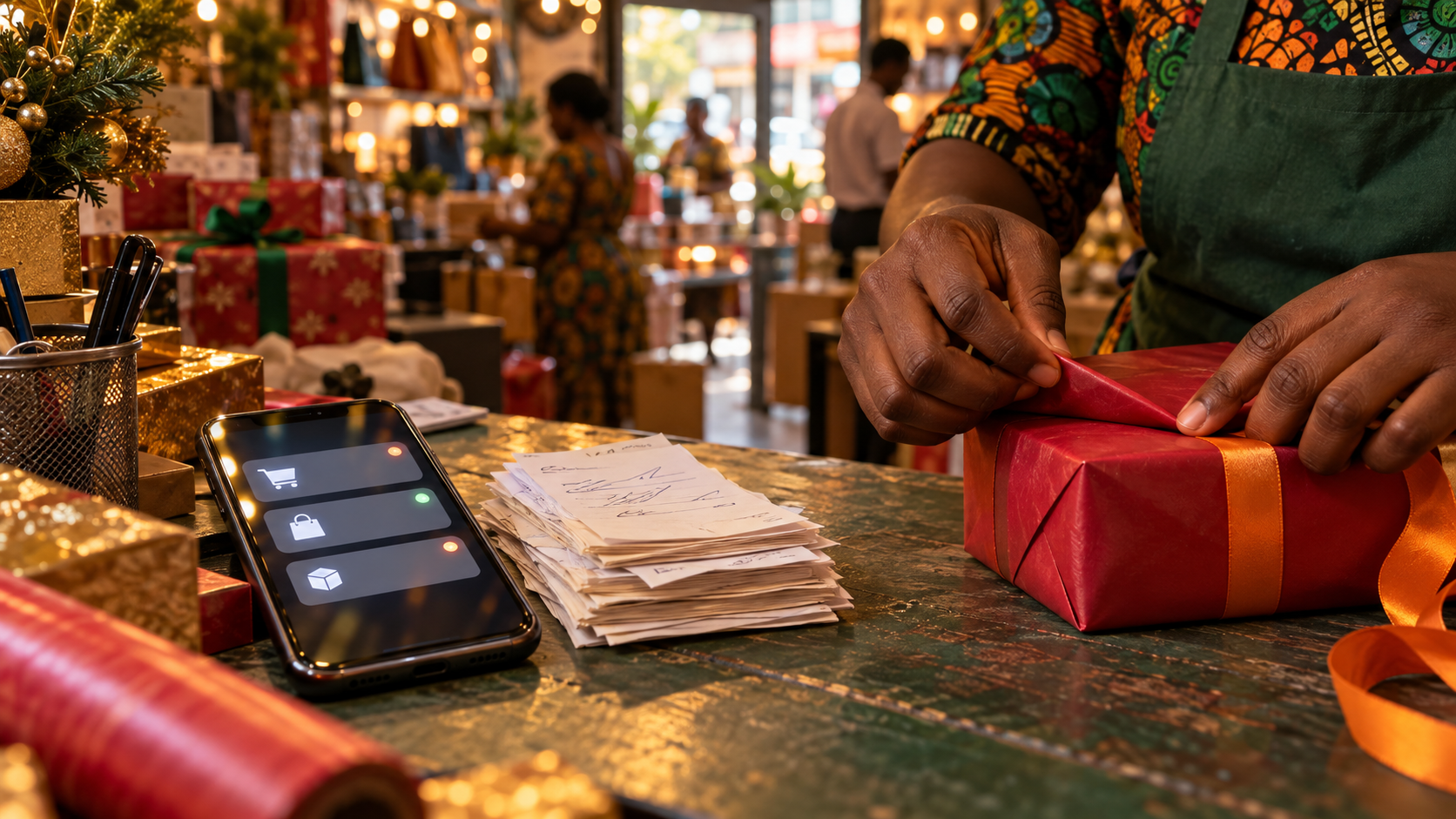
A WhatsApp order book or an Instagram DM list works fine at low volume because one person can hold all of it in their head. Ember month is exactly when that stops being true, and it stops being true at the worst possible time, when losing track of an order means a disappointed customer during the one season they were never going to forget it. The businesses that come out of December having grown are rarely the ones with the best product. They're the ones whose system for taking an order, confirming a payment and tracking a delivery didn't fall over once the volume tripled.
That's not an argument for throwing away WhatsApp or Instagram, customers like reaching a business there and that isn't changing. It's an argument for having something behind the chat that keeps the record straight when the chat itself gets too busy to serve as the record. A shared order log, an automatic payment reminder, one place that shows what's pending without anyone having to remember it, that's a smaller build than it sounds like, and it's worth having in place before the rush starts, not halfway through it.
If your busiest season is also the one where things start slipping through the cracks, get a free project estimate and let's look at what's actually breaking first.